


Space Launch Now - Tracker
4.82.52K Reviews
App Specs
- Version
- Varies with Device
- Updated On
- License
- Free
- Downloads
- 100,000+
- Developer
- Caleb Jones
- Categories
- News & Magazines
- Platform
- Android
Screenshots
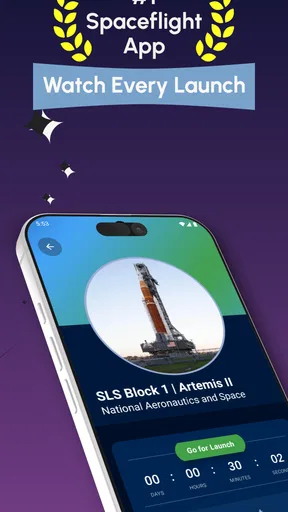
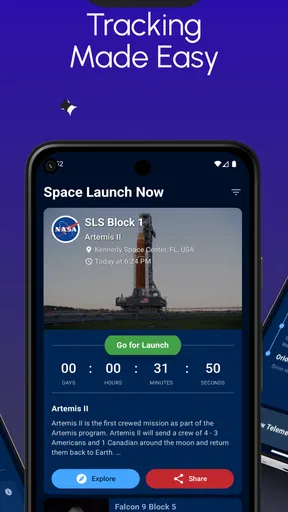
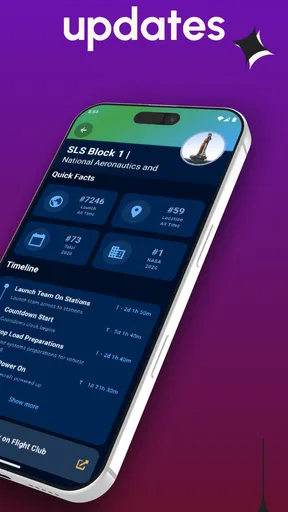
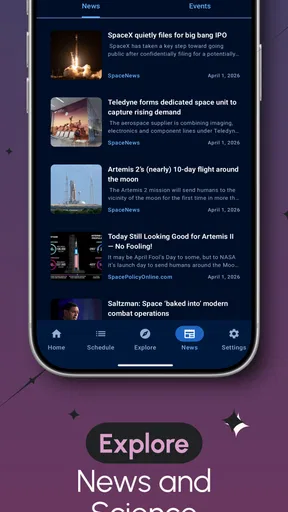
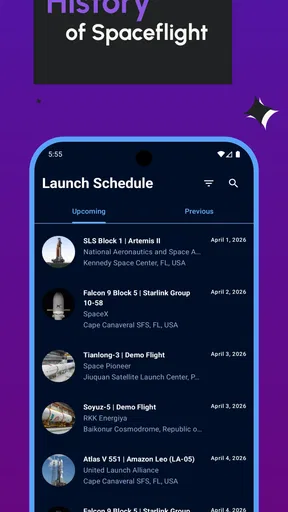
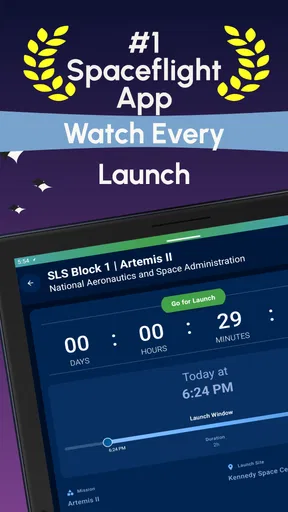
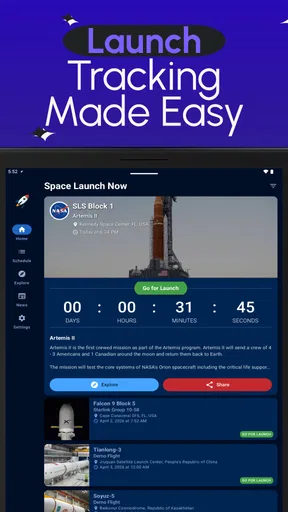
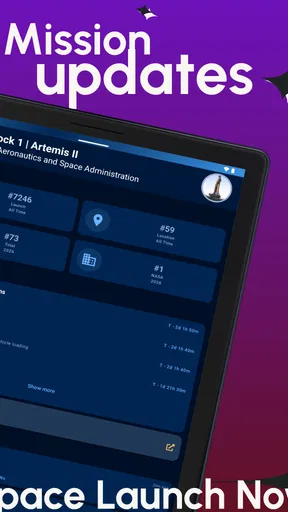
 Analysis by AppCompare
I like Space Launch Now - Tracker because it treats rocket launches as events worth following rather than as scattered headlines you have to hunt down. After spending time with it, my view is clear: this is a focused news and magazine app for people who want launch schedules, countdown context, and alerts in one place. It is free to start, rated for Everyone, and developed by Caleb Jones, so it feels approachable even if your interest in space is still fairly casual.
The important distinction is that this is not trying to replace a general news reader. It is much narrower and, in my experience, that is exactly why it works. Instead of mixing launch information with politics, science stories, opinion pieces, and unrelated technology news, it keeps attention on missions and the moments surrounding them. The store presents it as a way to follow launches from SpaceX, NASA, ISRO, and ESA, and that focus comes through in everyday use.
Why the launch-focused approach works
The best part of the app is the way it gives a launch a sense of progression. A normal news article may tell you that a mission is planned, while a general space website may bury the event among dozens of stories. Here, the useful question is simpler: what is launching, when is it expected, and should I pay attention now? That makes it practical for anyone who wants to follow spaceflight without building a personal system of bookmarks and calendar reminders.
I found the countdown idea especially useful for separating distant plans from events that deserve immediate attention. A schedule can contain launches that are still far away, while a countdown helps me recognize which ones might affect my evening or morning. That sounds like a small distinction, but it changes how I use the app. I am not just browsing a list of missions; I am deciding which event is worth setting aside time to watch.
The alerts are another strong reason to keep it installed. Rocket launches can be easy to forget because they compete with work, school, errands, and ordinary notifications. An alert turns the app into a quiet reminder system for a hobby that otherwise depends on remembering a date. I would still avoid treating any notification as a guarantee that the launch will happen at that exact moment, since launch schedules can move, but the reminder is valuable even when plans change.
That last point is important for new users. A countdown is best understood as a current planning aid, not a promise carved in stone. Weather, technical checks, range availability, and other operational issues can alter a launch window. The app is useful because it keeps the event visible and helps me react to updates; it cannot remove the uncertainty that is part of real-world spaceflight.
A better workflow than checking headlines
My preferred way to use it is to open the app at the start of the week, scan the upcoming schedule, and decide which launches actually matter to me. I then leave alerts enabled for the events I would be disappointed to miss. This is more efficient than repeatedly searching the web for “next rocket launch,” especially when I only want a quick answer rather than a long article.
Worth Reading Before You Choose

EA SPORTS FC Mobile 26 Is a Bigger Football Game, but It Takes Time

Flipboard Shows What News Apps Must Do Beyond the Feed

Switching to Android Auto Means Rethinking Your Driving Routine

Google Calendar Makes a Crowded Week Easier to Manage

Ludo King Makes the Most of the Minutes Between Plans

Baby Panda World Brings Quick Play to Modern Phones, but Its Game Library Feels Busy
There is also a useful mental shift here: I do not need to become an expert on every vehicle or mission before the app becomes worthwhile. I can use it as a doorway into the subject. A person who knows only a few agency names can still understand the basic rhythm of upcoming events, while a more committed follower can use the same schedule as a compact launch dashboard.
One non-obvious advantage is that the app supports different levels of attention. I can glance at it for a date, return later when an alert arrives, or use it as a prompt to watch coverage elsewhere. That makes it less demanding than a full space-news routine. It does not require me to read every update to get value from it.
It is also helpful for planning shared viewing. If friends or family are interested in a launch, the app gives me a practical starting point for a conversation: there is an event coming up, here is the expected timing, and this is the agency or organization connected with it. I would still confirm the final timing close to launch, but the app makes the first step much easier.
Where it fits among other space apps
Compared with a broad news app, this tracker wins on focus. A general reader may offer more background reporting and a wider range of topics, but it usually makes launch timing less central. Compared with searching through official agency pages, the app is more convenient for someone who wants several launch sources gathered into one place. Official sources remain useful when I need detailed mission material or the latest authoritative statement, but they are not always the quickest way to maintain a personal overview.
It also occupies a different space from video and social platforms. Those services are often better once a launch is underway because they provide live commentary, footage, and discussion. Space Launch Now - Tracker is more useful before that point, when I need to know what is approaching and whether I should make time for it. In other words, I see it as a planning and awareness tool rather than a complete live-broadcast destination.
That trade-off keeps the app from feeling bloated. It does not need to become a full encyclopedia or a social network to justify itself. Its strongest role is the small layer between “I enjoy space” and “I want to follow launches reliably.” For me, that is a more useful role than trying to do everything at once.
What may frustrate regular users
The same narrow focus that makes the app easy to understand can feel limiting if you expect deep reporting. A countdown and alert can tell me that an event is approaching, but they do not automatically provide the full story behind the mission. If I want extensive technical explanation, detailed launch analysis, or broad coverage of space science, I need another source alongside it.
I also think the alert feature requires restraint. Notifications are helpful when they mark launches I genuinely care about, but they can become noise if I enable everything without a plan. My practical advice is to begin with the alerts that match your interests, then adjust after a few days of use. A launch tracker should reduce the work of remembering events, not create a new stream of interruptions that I start ignoring.
Another limitation is the nature of launch schedules themselves. Even a well-maintained tracker is dealing with events that may slip, move, or change at short notice. A user who dislikes uncertainty may find the experience less satisfying than expected. I see schedule changes as part of the subject, but someone who wants fixed appointments should keep expectations realistic and check the latest update before arranging travel or a group viewing.
The app is free, which makes trying it easy, but it includes optional in-app purchases ranging from $0.99 to $49.99 per item. I would not install it assuming that every useful part must be paid, nor would I make a purchase without first using the free experience long enough to understand what I personally need. The sensible approach is to treat the optional spending as a choice, not as a reason to rush into payment.
There is also a question of depth for experienced space enthusiasts. Someone who already follows agency announcements, specialist launch calendars, livestream channels, and mission-specific communities may find this app redundant. Its value is greatest when consolidation and reminders save time. If you already have a carefully maintained workflow, adding another tracker may not improve it.
Small habits that make it more useful
I recommend checking the schedule at a calm moment rather than only opening the app after an alert appears. That quick review lets me distinguish launches I want to watch from those I only want to know about. It also prevents the notification system from becoming my only source of context.
For a family or classroom setting, I would use the app as a prompt for a short activity. Pick one upcoming launch, note the agency involved, and ask what the event is intended to accomplish. The tracker supplies the timely reason to look, while another source can provide the educational detail. This works better than expecting one app to serve as both calendar and textbook.
For travel or busy workdays, I would use alerts as a decision point rather than an instruction. If a notification arrives during an inconvenient moment, I can decide whether the event matters enough to follow immediately or whether I should read about it later. That keeps the app connected to my routine instead of allowing it to dictate it.
A further trade-off is worth remembering: a centralized tracker is convenient, but centralization can make me less likely to verify important changes elsewhere. When a launch is personally significant, I would use this app to notice the event and then confirm the latest timing through a current official announcement or live coverage. That two-step workflow combines convenience with sensible caution.
Who should install it
I think it is a strong fit for curious beginners, occasional launch watchers, families, students, and space fans who want a simple way to remember upcoming events. It is particularly appealing if you have ever learned about a launch after it happened and thought, “I wish I had known.” The app creates a dependable nudge without requiring a complicated setup.
It also suits people who follow more than one space organization. Keeping track of launches connected with SpaceX, NASA, ISRO, and ESA can otherwise mean visiting several places and remembering different schedules. Having those interests represented in one focused app is a practical advantage, even if I still use official sources for final confirmation and detailed information.
The Everyone age rating makes it easy to recommend in a mixed-age household. A child can be interested in the countdown aspect, while an adult can use the same information to plan a viewing session or explain what is happening. I would guide younger users toward additional educational material rather than expecting the tracker alone to answer every question, but the basic subject matter is accessible.
I would be more cautious about recommending it to professional researchers, serious launch analysts, or users who need comprehensive technical documentation. They may prefer specialist databases, official mission pages, or dedicated live coverage. This app can still serve as a convenient first alert, but it should not be mistaken for a complete research tool.
It is also not the right choice for someone looking mainly for general science news. The News & Magazines classification describes its broad placement, but the experience is much more specialized than a typical magazine reader. If your interests include astronomy discoveries, climate reporting, technology, and science policy in equal measure, a general news app will probably give you more variety.
What the numbers suggest about its maturity
The app has been available since April 20, 2016, and its audience gives it the feel of an established utility rather than a brand-new experiment. It has passed 100K installs, carries a 4.8 average from around 14K ratings, and has about 2.5K written reviews. Those figures do not tell me whether every user has the same needs, but they do suggest that the focused launch-tracking idea has found a substantial audience.
I would interpret the strong average rating carefully. People who install a dedicated launch tracker are already likely to value countdowns and reminders, so the app is being judged by an audience that wants this particular job done. That is good news if you share that goal, but it does not mean the app will satisfy someone looking for a broad space-media experience.
The developer, Caleb Jones, has kept the identity of the product clear: it is a specialized companion for following launches, not a general-purpose portal. From my perspective, that clarity is one of its better qualities. I would rather have a focused tool that does one important thing conveniently than a crowded app that hides the schedule beneath unrelated features.
The free entry point matters too. I can test the basic experience before deciding whether the app deserves a permanent place on my phone. Because optional purchases are available, I would pay attention to how much value I receive without spending and only consider an upgrade if it solves a specific problem in my own workflow.
My final recommendation
Space Launch Now - Tracker is best understood as a launch calendar with timely reminders, not as a complete space-news universe. That description is not a criticism; it is the reason I recommend it. When I want to remember what is coming, see a countdown, and follow launches across several major organizations without constant searching, it gives me a clean and useful starting point.
Its weaknesses are the natural limits of that approach. Schedule changes are unavoidable, alerts need sensible management, and readers who want deep reporting or live video will need companion sources. The optional in-app purchases also mean I would explore the free experience carefully before spending anything.
For me, the decision is straightforward. If you regularly say that you enjoy rocket launches but keep missing them, install it and make the alert system work for your routine. If you already rely on specialist calendars and official feeds, it may be more of a convenient backup than an essential tool. Either way, its focused design makes the choice easy: use it for awareness and planning, then turn to richer sources when you need depth.
Pros
- Tracks upcoming launches with accurate countdowns and mission details.
- Supports notifications for launch reminders and schedule changes.
- Covers launches from multiple agencies and providers worldwide.
- Includes livestream links for watching many missions in real time.
- Clean interface makes browsing launch schedules quick and convenient.
Cons
- Some mission information may be delayed when launch schedules change suddenly.
- Coverage and details can vary between agencies and individual missions.
- Frequent notifications may feel excessive unless carefully customized.
- Livestream availability depends on the launch provider and region.
- Some advanced tracking features may require an in-app purchase.
FAQs for Space Launch Now - Tracker
What is Space Launch Now - Tracker?
Space Launch Now - Tracker is a mobile app for following rocket launches, space missions, and related events from agencies and commercial providers around the world. It presents upcoming launches in a calendar or timeline, with information such as launch time, vehicle, mission, launch site, and provider. It is designed for space enthusiasts who want a convenient way to monitor the rapidly changing launch schedule.
What information can I find about a launch in the app?
A launch entry generally includes the mission name, planned date and time, launch vehicle, launch provider, launch location, and a short description of the payload or objective. Depending on the mission, the app may also provide links, countdown details, webcast information, and updates when the schedule changes. The amount of information can vary between launches and available public sources.
Does Space Launch Now - Tracker send launch notifications?
Yes, notifications are one of the app’s most useful features. After enabling alerts, you can receive reminders about upcoming launches and, where supported, updates related to a mission. Notification timing and available options may depend on the version of the app and your device settings. It is worth reviewing the alert preferences so reminders do not become excessive.
Are the launch times and schedules always accurate?
The app is useful for tracking schedules, but launch dates and times are not guaranteed. Spaceflight plans frequently change because of weather, technical inspections, range restrictions, payload readiness, or other operational issues. Space Launch Now - Tracker relies on published information and updates, so users should treat displayed times as estimates and check official provider or agency sources for final confirmation.
Is Space Launch Now - Tracker free to download and use?
The app may be available with free features, while certain versions or optional functions can include advertising, premium tools, or in-app purchases depending on the platform and current release. Before downloading, review the listing for the latest pricing and subscription details. Basic launch browsing may be enough for casual users, while dedicated space fans may appreciate additional customization and notification options.


